No, Ms Maliwal, rabies is not the only concern, and the time for long term fixes like strict ABC implementation has passed: An open letter
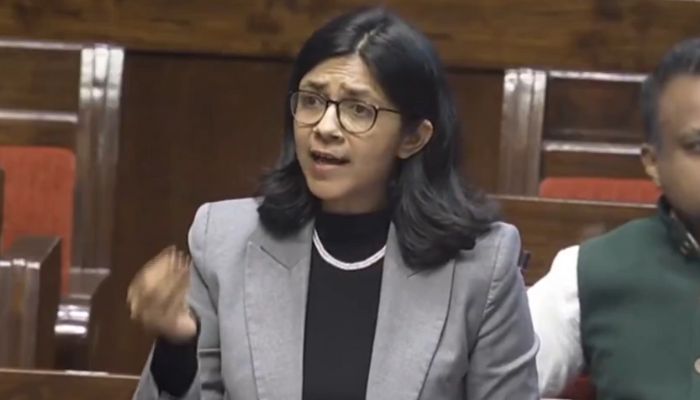
Rajya Sabha MP Swati Maliwal (Image: Screenshot from Sansad video)
Ms Maliwal,
On 16th December, you highlighted rabies as a public health concern and drew attention to gaps in vaccination, sterilisation, animal healthcare and enforcement of animal cruelty laws in Rajya Sabha. As you said, rabies is indeed a serious concern. No society should accept preventable deaths from such a disease. However, you limited the stray dog debate largely to rabies risks and overlooked a far wider and more immediate crisis.
जगह जगह ILLEGAL DAIRY MAFIA गौमाता को अपने मुनाफ़े के लिए शोषित कर रहा है। हर रोज़ ना जाने कितनी गायों को हम घायल अवस्था में सड़कों पर देखते हैं।
— Swati Maliwal (@SwatiJaiHind) December 16, 2025
ऐसा ही हाल Stray Dogs का है, सबको उठाकर शेल्टर में डालना कोई समाधान नहीं है।
संसद में बेज़ुबानों के लिए आज आवाज़ उठाई… pic.twitter.com/DTCw0FB87U
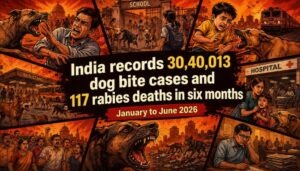
Ms Maliwal, rabies is not the only threat posed by stray dogs on Indian streets. Across urban and rural India, stray dogs are attacking children, the elderly, persons with disabilities, sanitation workers, delivery partners and pedestrians. While many of these attacks do not result in rabies, the suffering is unbearable. Victims end up with fractured bones, deep wounds, permanent disability, psychological and physical trauma, and heavy financial loss. These injuries and the consequences they bring to victims’ lives are rarely discussed in official statistics or parliamentary discussions.
The frequently cited figure of “only 56 rabies deaths” is deeply misleading. It ignores the vast economic and social burden created by dog attacks. Millions of anti rabies vaccines are administered in Indian hospitals every year. Every dog bite results in emergency treatment, repeated hospital visits, surgical interventions in many cases, prolonged medication, aftercare and lost workdays.
Rabies is not the only concern. Stray dogs attack children, the elderly, the disabled, delivery partners and others. These attacks leave deep physical, mental and financial scars that many simply cannot afford. When someone says “India reported only 56 rabies deaths”, they…
— Anurag (@LekhakAnurag) December 15, 2025
For families without insurance or savings, this often becomes a lifelong financial setback. Mental trauma, particularly among children, is rarely recorded but is very real.
Your emphasis on Animal Birth Control and vaccination as long term solutions is valid, but it is not sufficient. Even under ideal conditions, ABC does not produce immediate population reduction. Available studies and municipal data show that visible decline in stray dog numbers takes eight to ten years of sustained and near perfect implementation. India does not currently possess such uniform administrative capacity. During this prolonged transition period, dog bites, maulings and fatalities will continue, with citizens bearing the cost.
Leaving dogs on the streets while waiting for population curves to gradually correct themselves is not a neutral policy choice. It places the burden of risk squarely on ordinary citizens, particularly the most vulnerable. Public streets cannot function as permanent holding areas for unowned animals. No other public health crisis is managed by asking people to adjust for a decade.
The response, therefore, must move beyond rabies prevention and beyond ABC alone. What is urgently required on a war footing is the systematic removal of stray dogs from public spaces into regulated shelters, followed by structured rehabilitation and large scale adoption. This is not about cruelty or elimination. It is about separating human living environments from unmanaged animal populations in a manner that safeguards both.
This is also where the role of self styled dog lovers, often referring to themselves as “dog parents”, must be examined honestly. If dogs are indeed viewed as children, then leaving them on traffic filled roads, near garbage dumps, construction sites and busy neighbourhoods cannot be considered responsible care. No parent would consider the street a safe or acceptable place for a child to live.
If citizens wish to claim parental responsibility, it must extend beyond social media advocacy and street feeding. Meaningful participation requires helping create and manage shelters, contributing to food and medical care for sheltered dogs, ensuring behavioural management and actively stepping forward to adopt. Advocacy without ownership shifts risk onto the public while allowing the advocate to remain unaccountable.
Street based coexistence is often defended in the name of compassion, yet compassion without responsibility carries consequences. Feeding dogs on pavements while opposing shelters or adoption frameworks exposes these animals to accidents, disease and conflict, and exposes citizens to injury and trauma. A shelter driven and adoption centred approach protects dogs from starvation and road accidents while restoring safety to public spaces.
Your own speech acknowledged the near absence of adequate shelters and the poor condition of those that exist. That reality makes continued reliance on street based management even more untenable. The solution to inadequate shelters cannot be continued exposure of citizens to daily risk. It must be rapid investment, decentralised shelter infrastructure, independent monitoring and time bound outcomes.
There is a serious need for a national response to the stray dog menace. It has to be treated as a public safety, public health and governance issue. The debate cannot and must not end with animal welfare alone. Rabies prevention is a must, but it is not sufficient. India needs a comprehensive, humane and immediate strategy that removes stray dogs from streets. The dogs need to be rehabilitated responsibly, and mass adoption drives are the only solution to ensure their safety and a decent life. This is the only way to restore public spaces to safety. Leaving dogs on streets for another decade is not the solution, at least not for India.
The debate deserves that honesty.
Regards,
Anurag
About this project: This website is independently maintained. Its purpose, operation, and disclosures are explained here.